
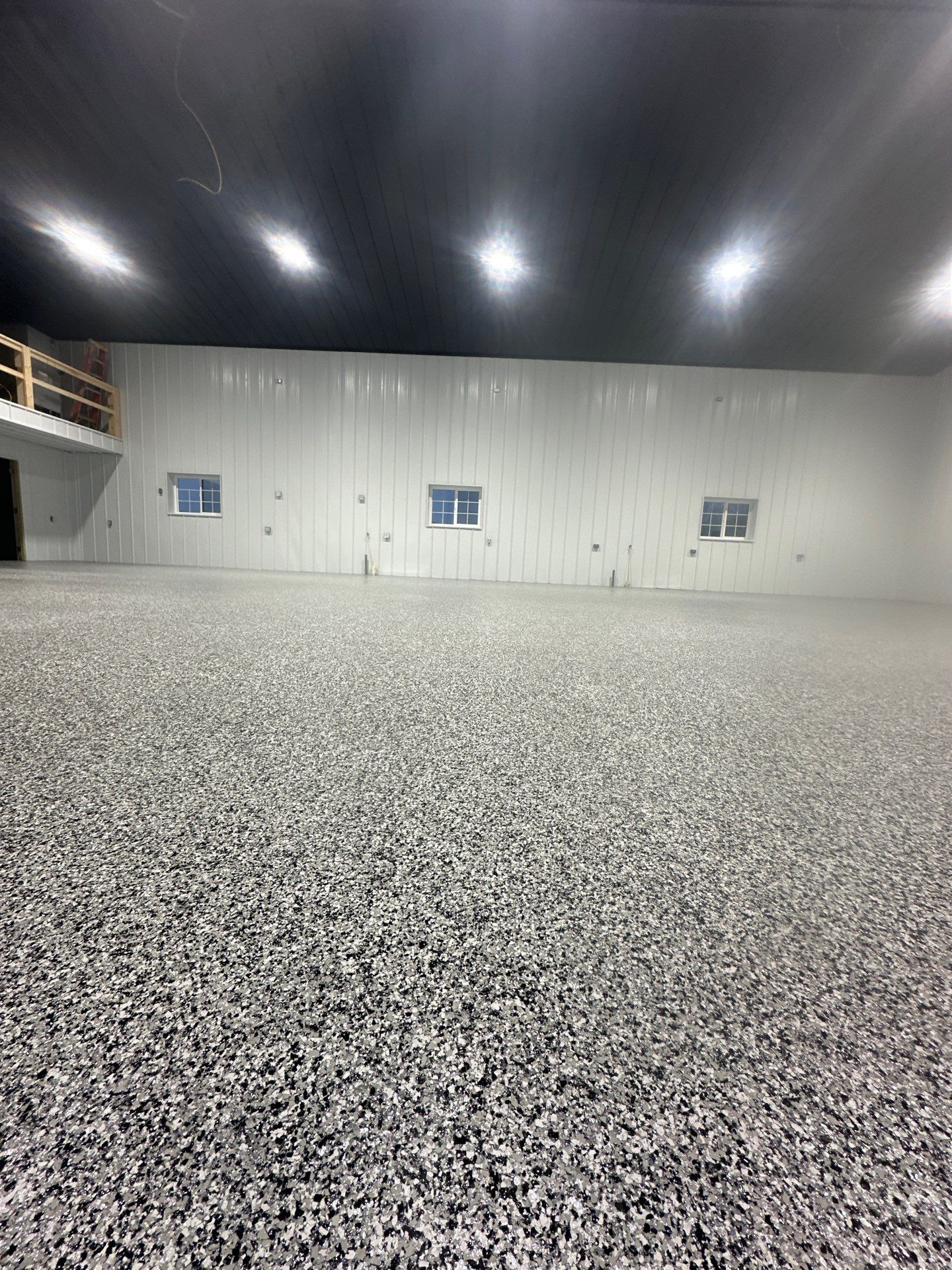
What Does a
Floor Coating
Actually Cost?
Fair question. The honest answer is that it depends on your concrete. A flat price posted online can't see your cracks, your moisture readings or what's already on the slab. Here's exactly what goes into a real number.
Every Slab Is Different. Every Price Should Be Too.
We get asked about price more than anything else, and we'd love to just hand you a number. The problem is that a price posted online is either too low to be real or padded high enough to cover every possible surprise. Neither one helps you plan.
Iowa concrete takes a beating. Freeze-thaw cycles, road salt dripping off vehicles all winter, spalling, settling cracks and old sealers all change what a floor needs. Two garages on the same street can need completely different prep. The only price worth anything comes from someone standing on your actual floor. That visit is free, usually takes 15–30 minutes, and you get a firm, all-inclusive price before we leave.
Ballpark numbers over the phone always lead to surprises on install day, for you and for us. So we come take a look. A few minutes on your floor, no pressure, and you get a real number you can actually plan around.Revival Concrete Coatings — Ankeny, IA
What Are We Coating?
Pick your surface below. Each one has its own checklist we work through at your free visit, and Iowa winters add a few items most of the country never has to think about.
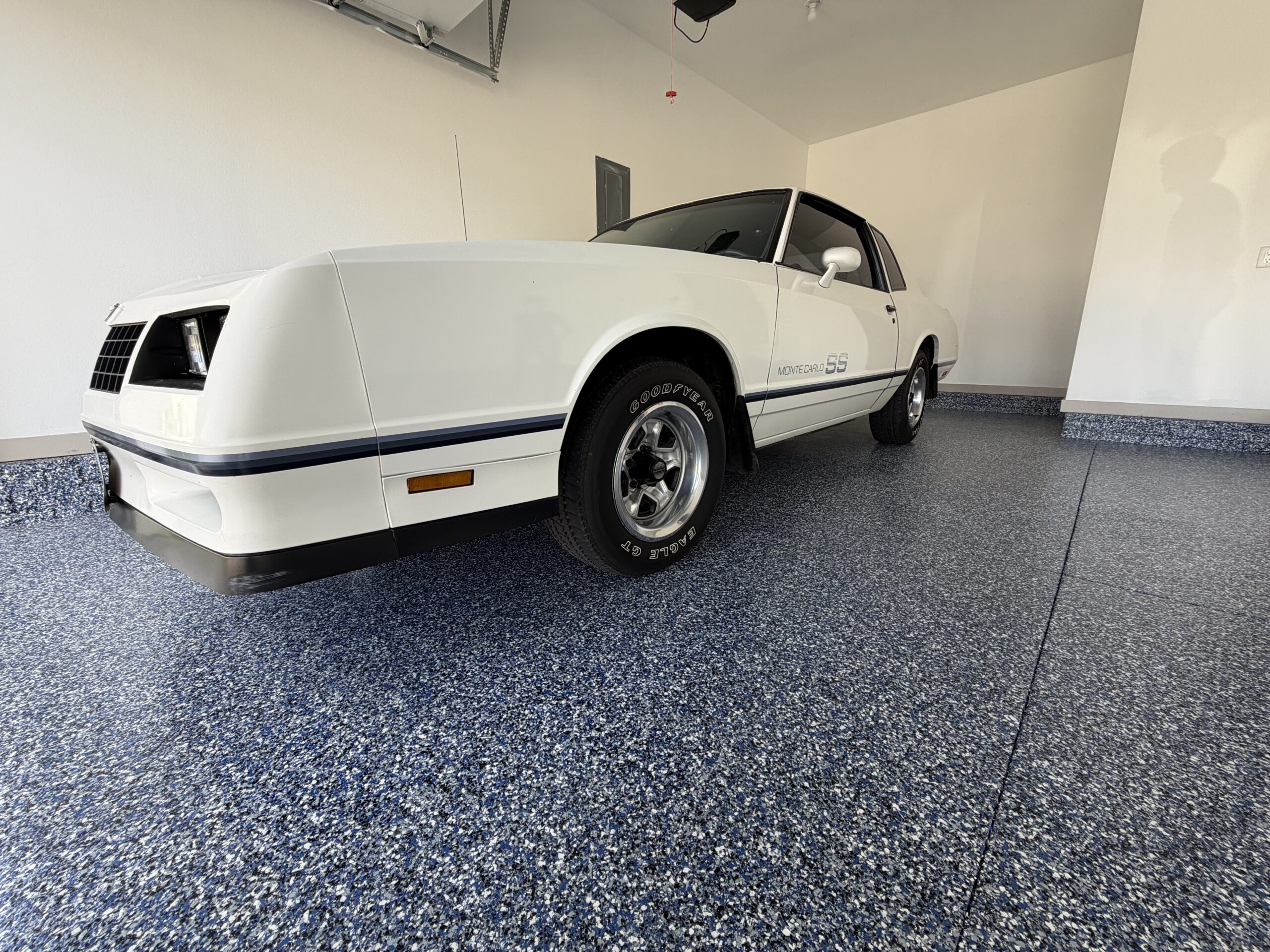
Garage Floor Coating
Iowa garages see snowmelt, road salt and deicer every winter, plus hot tires and oil the rest of the year. Before we recommend anything, we look at five things. Skip any one of them and the floor won't last the way it should.
Road salt and freeze-thaw cycles pop the surface off concrete, especially near the garage door. Spalls and pits are repaired before anything is coated.
Measured on-site. 2-car, 3-car and tandem garages vary, and that drives materials and labor.
Crack and spall repair is standard on every install where existing cracks are present.
Old paint, sealer or a failed DIY kit has to come off before a new system can bond. How much is there affects the scope.
Coating the entry steps or the short walls around the garage is an add-on that gives the space a finished look.
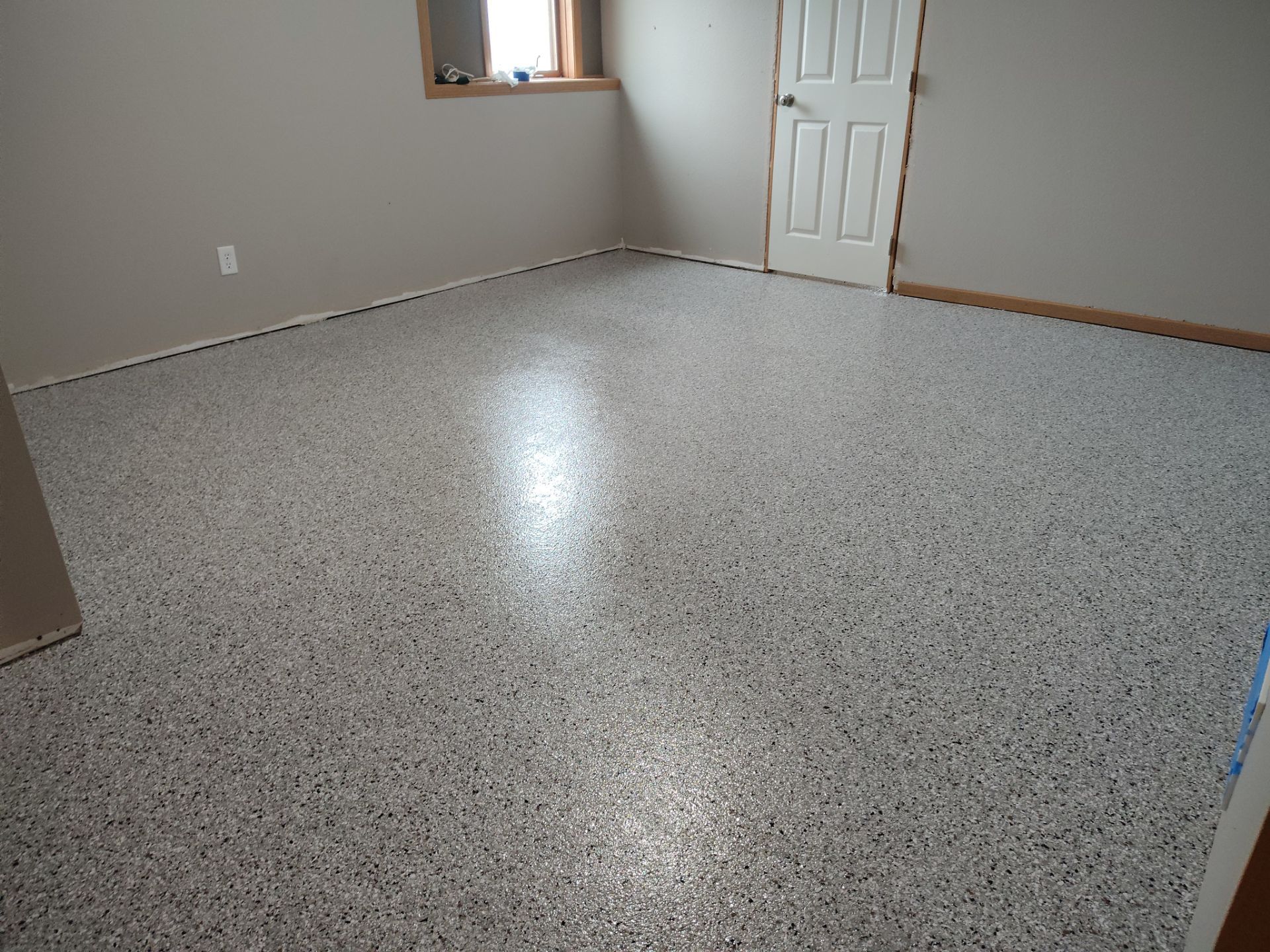
Basement Floor Coating
Basements are below grade, so moisture is the first thing we check. A coated basement floor is easier to clean, brighter and far more finished than bare concrete. Here's what we look at.
Every slab is tested. When readings call for it, we add a moisture vapor barrier before the coating goes down.
Open rooms, utility areas, mechanicals and finished walls all affect prep time and access.
Carpet glue, tile mastic, paint and old sealers have to be fully removed first.
Flake, quartz and solid-color systems all work indoors. Your consultant brings samples.
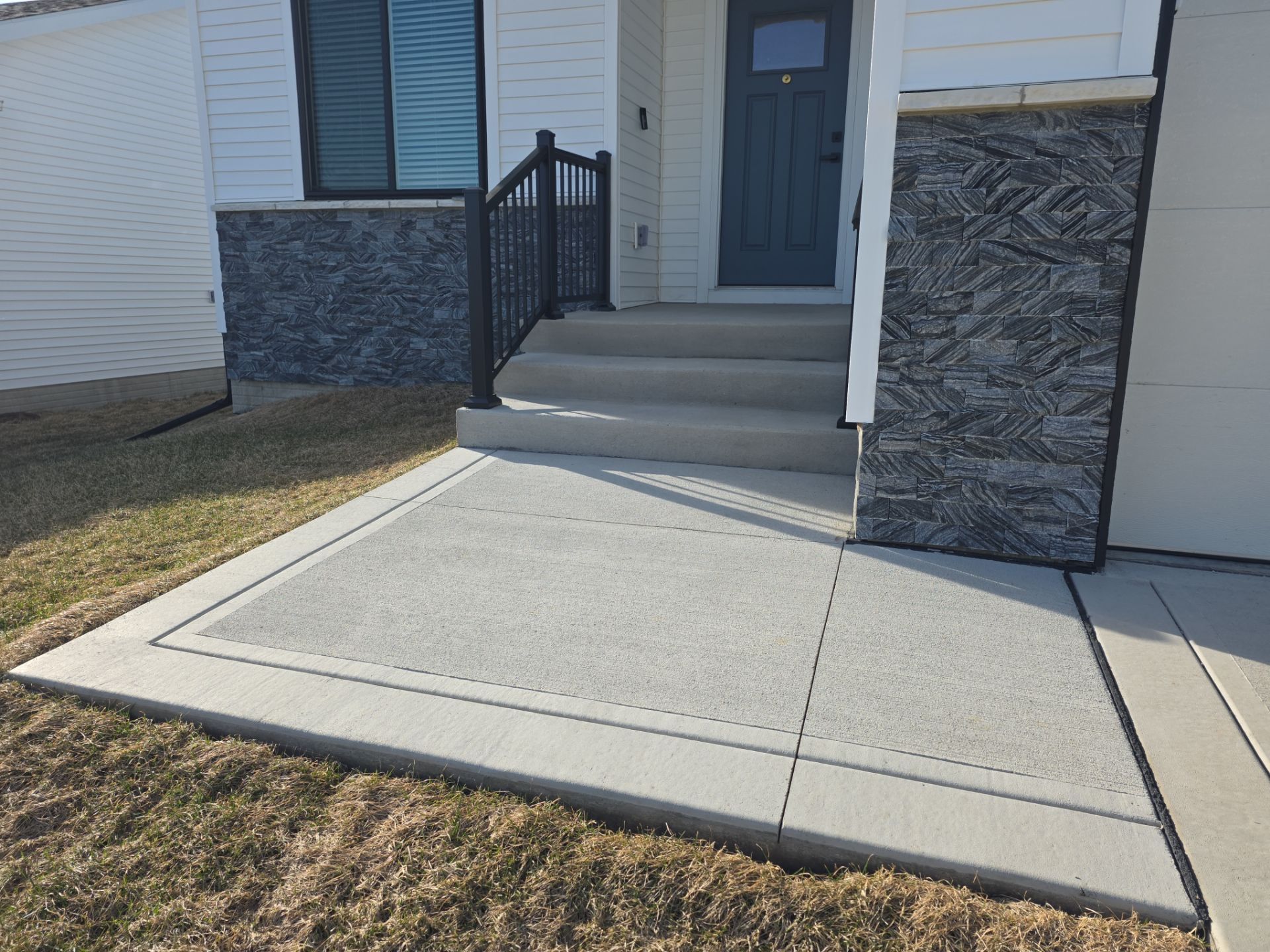
Patio & Front Porch Coating
Outdoor slabs in Iowa go from summer sun to ice and snow in a few months. The topcoat, the texture and the condition of the concrete all matter more outside. Here's what we check.
Outdoor surfaces get a UV-stable polyaspartic topcoat so colors don't yellow or fade.
Spalled or flaking surfaces are repaired first, and we'll talk through winter care for your slab.
Slip-resistant texture can be added on patios, porches and steps that get wet.
Front steps and slab edges take extra prep and detail work, and they're measured as part of the scope.
Pool Deck Coating
Pool decks deal with chlorine, standing water, bare feet and full sun all season, then sit through an Iowa winter. The wrong product gets slick, fades and starts lifting at the edges. Here's what we check.
Chlorine and pool chemicals call for a chemical-resistant, UV-stable topcoat.
Pool decks get a slip-resistant texture for wet, barefoot traffic.
Coping edges, drains and expansion joints add detail work to the prep.
Pool decks are often the most cracked and spalled surfaces we see. Repairs are scoped individually.

Grind & Clear
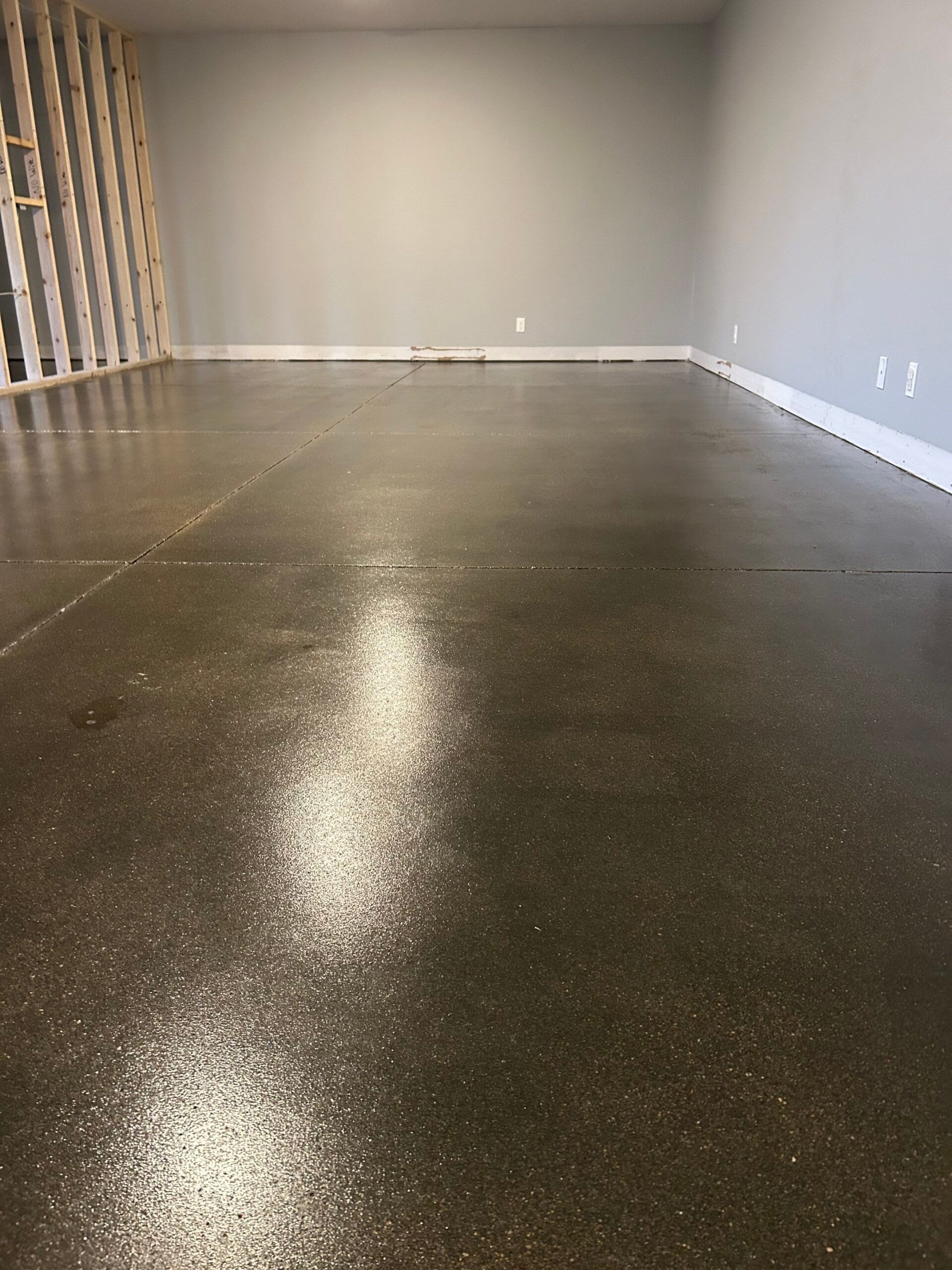
Grind & Clear is our functional option: we grind the concrete and seal it with a clear coat, with no flake or color. It protects the slab and makes it easier to clean, and it's a practical choice for shops, storage and utility spaces. Here's what affects the scope.
A clear coat shows the concrete underneath, including stains, patches and repairs. We'll set honest expectations at the visit.
Measured on-site. Larger spaces lower the effective cost per square foot.
Cracks and spalls are still filled before sealing, even without a color coat.
If you want a decorative finish, a flake or quartz system is usually the better fit, and we'll quote both.
Commercial & Industrial Coatings
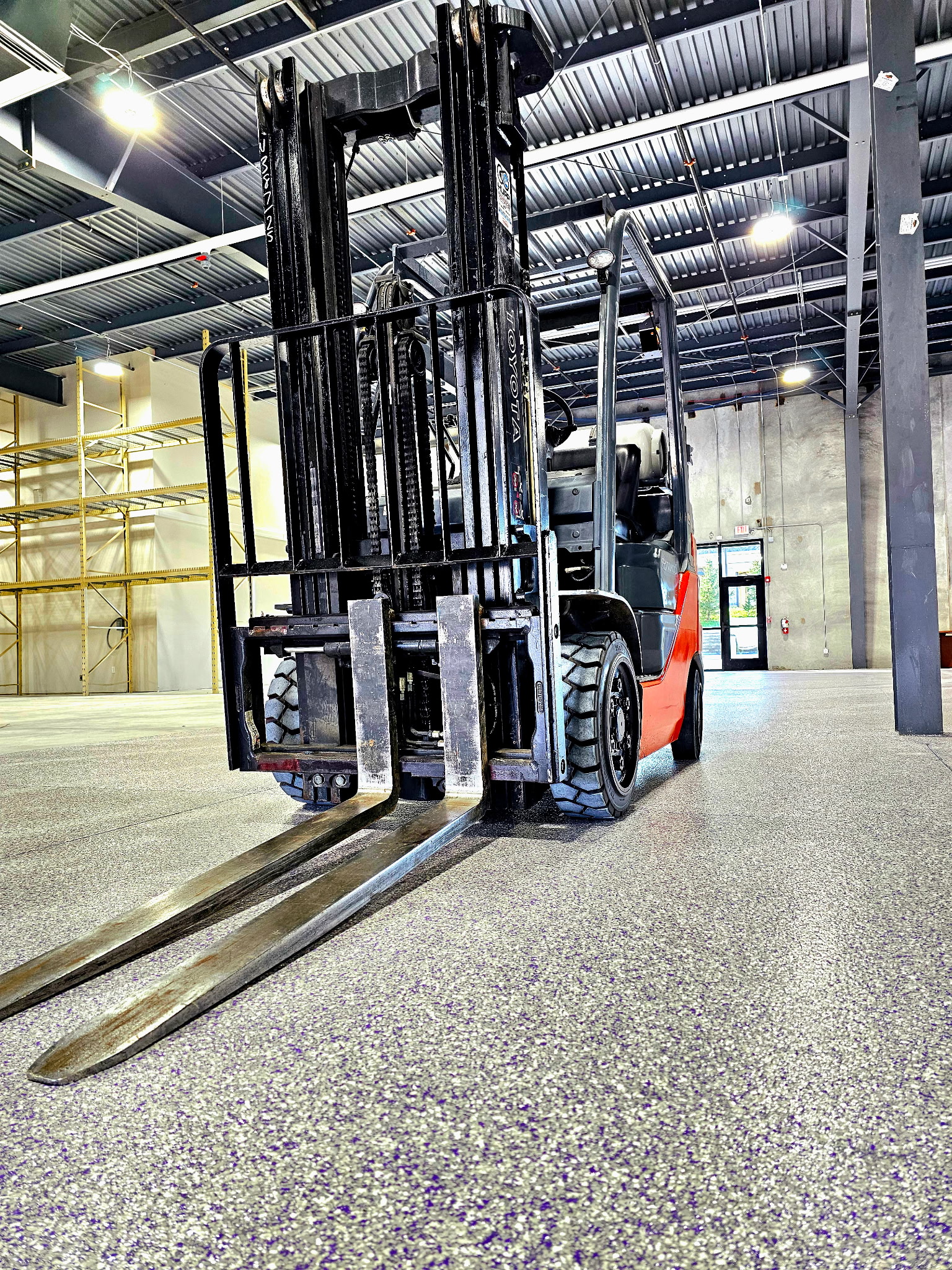
Commercial jobs vary more than anything else we do. A warehouse, a shop and a showroom each need a different system, and downtime matters. A sales rep assesses every commercial space in person.
Foot traffic, carts, forklifts and vehicles each call for a different build and hardness. High-wear systems are available.
Shops, kitchens and industrial spaces each have their own chemical resistance needs.
We plan the install around your operations so you know exactly when the floor is back in service.
Larger floors spread setup and mobilization across more square footage.
We regularly travel farther for commercial projects than for residential. Ask us about your location.
Almost Everyone Says "Diamond Ground."
Few Do It Right.
Diamond grinding is a selling point in this industry, and it should be. But knowing a grinder touched the floor doesn't tell you much. What matters is the surface profile it actually left behind, and that's where a lot of quotes fall apart.
The CSP Scale — and Why CSP-3 Is the Minimum
The concrete industry uses a standardized Concrete Surface Profile (CSP) scale to define what "prepared" actually means. It runs from CSP-1, barely touched, to CSP-10, a heavy shot blast. Professional coating systems need at least CSP-3 to bond into the slab instead of sitting on top of it.
A lot of crews make one light pass and move on. That gets you CSP-1 or maybe CSP-2. It looks done and photographs fine, and then it starts peeling within a year or two. We diamond grind every floor to CSP-3 with a HEPA-vacuum grinder, and about a third of every project is prep. We never acid etch in place of grinding.
"We diamond grind every floor." Nearly every competitor says it. Few mention a CSP target, how many passes, or how they check the result.
We grind to CSP-3 on every job, test the slab for moisture first, and repair cracks and spalls before any coating goes down.
The coating grabs the weak surface layer, not the concrete itself. Winter salt, temperature swings and traffic do the rest.
At CSP-3 the concrete is genuinely open. The basecoat flows into the profile and locks in, which is the bond that holds up through Iowa winters.
A contractor who can't answer these specifically may not be using a professional-grade process, whatever their marketing says.
Polyurea or Epoxy Basecoat? We Match It to Your Slab.
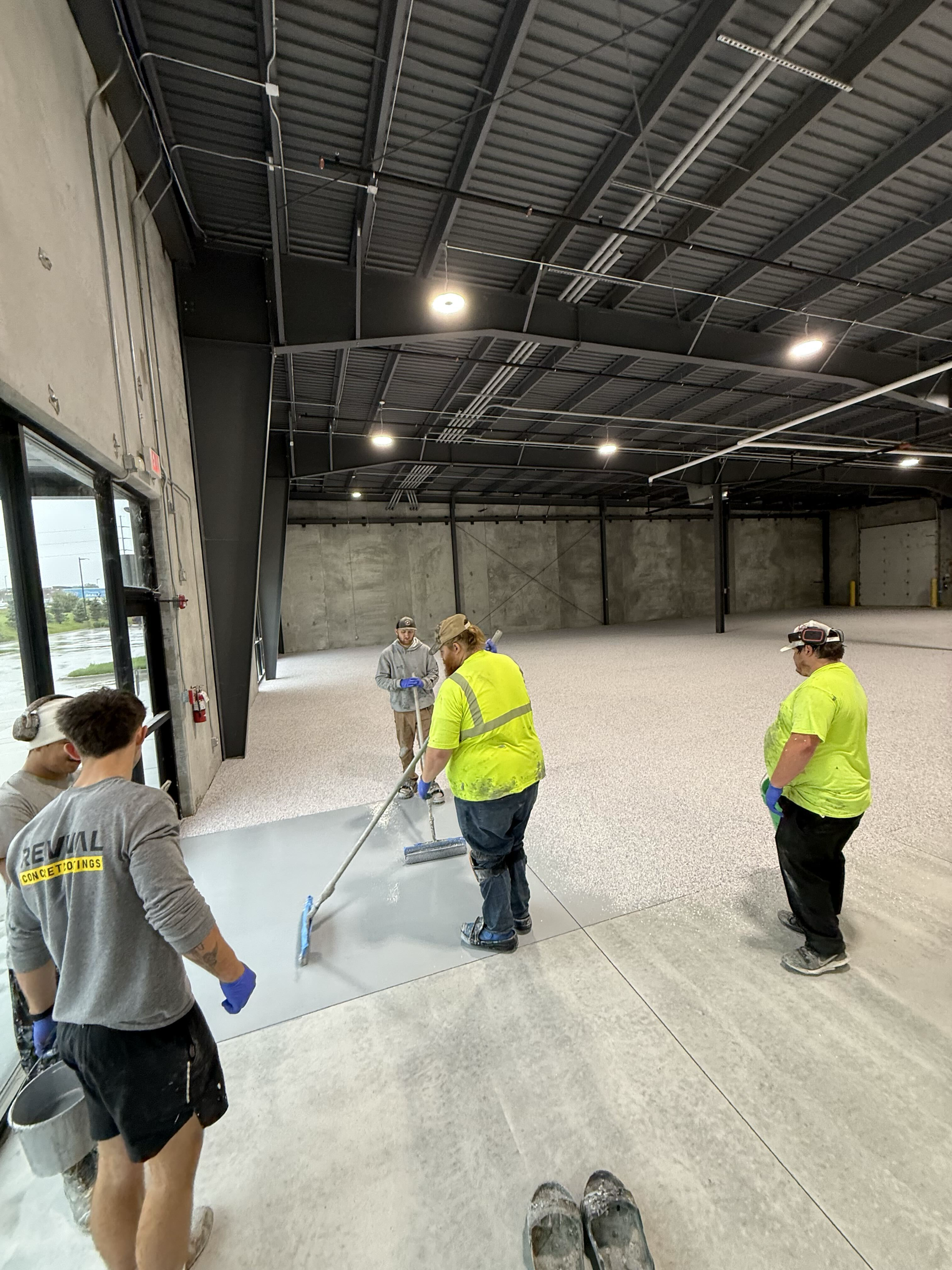
Every Revival floor is a layered system: a basecoat bonded into ground concrete, a full broadcast of decorative flake, and a UV-stable polyaspartic topcoat. The basecoat is the layer that holds everything to the slab, so we choose it based on what we find at your visit.
Polyurea Basecoat
Most Revival floors get a polyurea basecoat. It's a fast-curing, flexible system that fits a one-day install and handles the temperature swings concrete goes through in Iowa.
- Fast cure keeps most residential installs to one day
- Flexible through hot summers and cold winters
- Lets us install year-round, including cold-weather jobs
Industrial-Grade Epoxy Basecoat
On some slabs and systems, an industrial-grade epoxy basecoat is the better fit. Your consultant will tell you which basecoat your floor is getting and why.
- 100% solids, professional-grade material
- Chosen at your visit based on your slab
- Same flake and polyaspartic topcoat on top
The Factors Behind
Every Honest Quote
These are the variables your consultant evaluates at the free visit. Tap any card to see why it matters.
Tap any card to expand
Total coated area is measured on-site, not guessed from a floor plan. Larger projects lower the effective cost per square foot, because setup, equipment and material delivery spread across more area.
More sq ft = lower per-sq-ft costRoad salt and deicer ride in on your vehicles all winter, and freeze-thaw cycles break down the surface of the concrete. Spalled, pitted and flaking areas are repaired before coating so the system bonds to sound concrete.
Common on Iowa garage slabsMost slabs have at least some cracking, and that's okay. Crack and spall repair is a standard part of every install, filled with a 100% solids polyurea mender before coating. Your consultant looks at every crack at the visit.
Included in your quoteOld paint, sealers and failed DIY kits have to come off before a new coating can bond. Box-store kits are the most common. They're thin, often weren't bonded well to begin with, and grinding them off takes real time.
Assessed before we priceWe test every slab for moisture. Basements and slabs with poor drainage are the most likely to need extra protection. When readings call for it, we add a moisture vapor barrier before coating rather than hoping for the best.
Tested on every slabFlake, quartz, solid-color and grind & clear systems each use different materials and labor. Full flake broadcast is our most popular option. Browse flake colors or try them on a photo of your space with the visualizer.
Samples at your visitWe're a Simiron Certified Dealer and Sherwin-Williams High Performance Flooring Certified. Your floor gets a professional polyurea or epoxy basecoat matched to your slab, plus a UV-stable polyaspartic topcoat. These aren't the consumer products sold at home improvement stores.
Simiron & Sherwin-Williams certifiedEntry steps, stem walls, extending the coating onto the garage apron or a patio, saw-cut filling, drains and tight spaces all affect time and materials. Your consultant can show you options and price them on the spot.
Priced at your visitFinancing is available through Acorn, with options for a range of budgets. It doesn't change what goes on your floor: every project gets the same system however you pay. Ask your consultant at the visit.
Financing through AcornA consultant will look at all of the above at your property: free, no pressure, no obligation.
See What Your Consultant Will Look At
Not sure what to expect from a free quote visit? Check the conditions that apply to your floor. When your consultant arrives, these are exactly the things they'll evaluate.
The only Simiron Certified Dealer in Des Moines
High Performance Flooring certified installers
From homeowners and businesses across greater Des Moines
Most residential projects are done in 5 to 10 hours
Why the Cheapest Quote
Often Costs the Most
We hear from Des Moines-area homeowners who had a floor done for less and watched it peel, yellow or lift after a winter or two. Grinding off a failed coating and doing it right the second time almost always costs more than doing it right the first time.
When one quote comes in well below the others, ask a few direct questions. Did they test for moisture? Did they grind, and to what profile, or just acid wash? What basecoat and topcoat are going down? Those aren't trick questions; they're the basics, and we walk through every one with you.
- Diamond ground to CSP-3, never acid etched in place of grinding
- Every slab tested for moisture before coating
- Professional polyurea or epoxy basecoat with a UV-stable polyaspartic topcoat
- 15-year written warranty on residential floors, 5 years on commercial
Crack & Spall Repair Is Part of Every Install
Between freeze-thaw cycles, road salt and settling, most slabs around Des Moines have some cracking or surface damage, and that's not a deal-breaker. It just means we fix it first. In many cases, coating is far more cost-effective than replacing the slab.
If there's significant damage on your floor, your consultant will tell you at the free visit what's needed and how it affects the price, before anything is scheduled.
Hairline Cracks
Handled during standard prep.
Cracks & Chips
Filled with a 100% solids polyurea mender before coating.
Salt Spalling
Flaking, pitted areas repaired so the coating bonds to sound concrete.
No Surprises
Repair scope included in your written price before we schedule.


No Pressure. No Surprises. Just a Real Price.
We're locally owned, and we run our own install crews. That's why we can give you a firm, all-inclusive price and stick to it. Here's what you get when you book a visit.
Revival Concrete Coatings
vs. Budget Installers
These are the things that separate a floor that lasts from one that fails after a winter or two.
| What You Are Comparing | Revival | Budget Installers |
|---|---|---|
| Surface Preparation | Diamond ground to CSP-3 with a HEPA-vacuum grinder | Acid wash or a single light pass — often CSP-1 or 2 |
| Moisture Testing | Every slab tested; vapor barrier when readings call for it | Often skipped |
| Coating System | Professional polyurea or epoxy basecoat + polyaspartic topcoat | Thin, low-solids or consumer-grade epoxy |
| UV Resistance | UV-stable polyaspartic topcoat — won't yellow | Standard epoxy yellows in sunlight |
| Crack & Spall Repair | Standard on every install | Coated over — damage shows through |
| Install Time | Most homes done in one day | Often 2–3 days with long recoat windows |
| Warranty | 15-year written warranty residential, 5-year commercial | Limited, verbal or none |
| Certifications | Simiron Certified Dealer & Sherwin-Williams HPF Certified | — |
Pricing Questions From
Des Moines Homeowners
Ready to Get Your
Real Price?
We'll come see your floor and give you a firm, all-inclusive price. No pitch, no pressure, and no number that changes on install day.